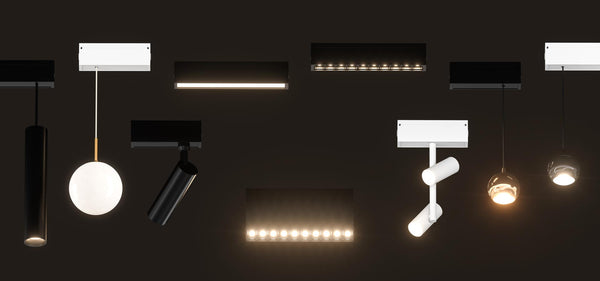
Ceiling lighting in dental practices: requirements, values and modern solutions

Lighting in medical facilities is more than just a design element. Especially in dental practices, room lighting must take into account various visual tasks and the use of workstations. In this context, an often underestimated area comes into focus: ceiling lighting in the treatment room. In this article, we look at why high-quality ceiling lighting is essential for dental practices, what technical requirements need to be considered, and what modern solutions are available on the market – for example from providers such as Novarail.
Why is ceiling lighting in the treatment room so crucial?
Dentistry is a visually demanding field. Color nuances, the smallest surface changes, and tissue structures must be detected and treated with high precision. The main light source in the room – often the ceiling – influences not only visibility but also the overall atmosphere of the room. Poor lighting can create shadows, glare, or unnatural color reproduction. This is why the arrangement of luminaires and the lighting intensity for the room are planned.

Technical requirements for ceiling lighting
1. Illuminance (lux value)
ASR A3.4 specifies at least 300 lx for low-risk medical activities, 500 lx for activities with an increased potential for hazards, and 1,000 lx for relevant sub-areas. Which value applies depends on the activity; the lighting is planned for the room.
You can find an overview of the values for all practice rooms – from the reception to the laboratory – in the guide Practice lighting according to ASR A3.4 and DIN EN 12464-1.
2. Glare control (UGR value)
The UGR value depends on the luminaire, room geometry, arrangement, and viewing direction. We therefore assess glare in the lighting plan for the specific room.
3. Color rendering (CRI value)
ASR A3.4 requires at least Ra 90 for medical activities. NOVARAIL luminaires have a CRI of 97; the suitability of the lighting for an activity is assessed in the room.
4. Color temperature
The color of the light shapes the color impression in the room. In treatment rooms, neutral white to daylight white light (4,000 – 6,000 K) is common. Flexible systems allow adjustment depending on the time of day or treatment situation.
5. Uniformity of illumination
Uniform room lighting limits harsh shadows and creates clear visibility.
Ergonomics and employee protection
Not only must the technical standard be met, but the effects on the medical staff must also be considered. Insufficient lighting or unfavorable luminaire positions make visual tasks at the workstation more difficult. Time-controlled lighting planning can change the color of the light throughout the day. The appropriate illuminance and arrangement are calculated for the activities in the room.
Patient perspective: Light has an emotional effect
Patients usually spend a large part of their practice visit lying down – looking at the ceiling. Subtly designed ceiling lighting limits direct glare and creates a calm atmosphere in the room. Warm white light components in the peripheral area of the room, combined with clearly defined working light in the center, create a balanced atmosphere.
Requirements in new builds and existing conversions
A large part of dental practices are built in existing buildings today. Retrofitting or optimizing ceiling lighting presents particular challenges: limited ceiling height, existing installations, or heritage protection requirements. Therefore, systems are needed that are modular, easy to install, and retrofittable – ideally without major structural changes.
Example implementation: The MEDICAL system by Novarail
A practical example of a modern implementation is the THE MEDICAL system by Novarail. The company specializes in 48V track lighting systems that can be flexibly adapted to different room concepts.
Features at a glance:
-
CRI 97: For natural color rendering
-
Glare assessed in room planning: Minimizing glare
-
Stepless color temperature control (2,700 – 6,500 K)
-
App-controlled operation or via Zigbee, WLAN, Bluetooth
-
Installation: Attach the track to the ceiling, magnetically insert and align the luminaires
-
Modular design: Expandable and combinable with various luminaire modules
-
Energy efficiency: Long-lasting LED technology with low consumption
NOVARAIL serves as room and workstation lighting. It does not replace a medical examination or treatment lamp, for example at the dental chair.
Lighting planning: What practice owners should pay attention to
1. Professional lighting calculation
A detailed lighting calculation is a prerequisite for planning in accordance with standards. Providers such as Novarail support with lighting simulations already in the planning phase.
2. Integration with room design and acoustics
Lighting must not be considered in isolation. Especially in open or acoustically sensitive treatment rooms, coordination with ceiling systems, colors, and materials plays an important role. How light, colors, and furnishings are planned together in the dental practice is shown by our partner NOVADIS Dental Practice Design.
3. Future-proofing
Systems should be updateable and expandable. Open standards (such as Zigbee) enable integration into modern practice IT or smart control concepts.
Sustainability and cost-effectiveness
In addition to the medical and ergonomic perspective, energy efficiency is also a key argument today. LED technology offers clear advantages over conventional light sources. Modern sensors and daylight-dependent control can further reduce energy consumption. In the long term, this results in significant cost savings.
Summary: Good ceiling lighting is an investment in quality
The requirements for lighting in dental practices are increasing. Well-planned ceiling lighting supports visual tasks in the room and can be adapted to the requirements of ASR A3.4. Systems such as Novarail THE MEDICAL show that technology, design, and practical suitability can be intelligently combined today.
Anyone building or renovating today should not treat lighting as an afterthought, but rather understand it as an integral part of the medical infrastructure.